The S6160 Secretarial Disaster Designation has officially recognized what we’ve been seeing on the ground at GoodChickenGardens.com: a severe and sustained moisture deficit that threatens the long-term viability of Georgia’s small farms.
While the drought has created significant operational hurdles, we are utilizing every conservation tool in our kit to protect the soil health we’ve spent the last 6 years restoring through bioremediation.
Our Drought Mitigation Strategy:
To combat the drying effects of the current disaster, we have implemented a series of Passive Hydrological Systems. These are not “fixes,” but survival strategies designed to capture every possible drop of erratic rainfall:
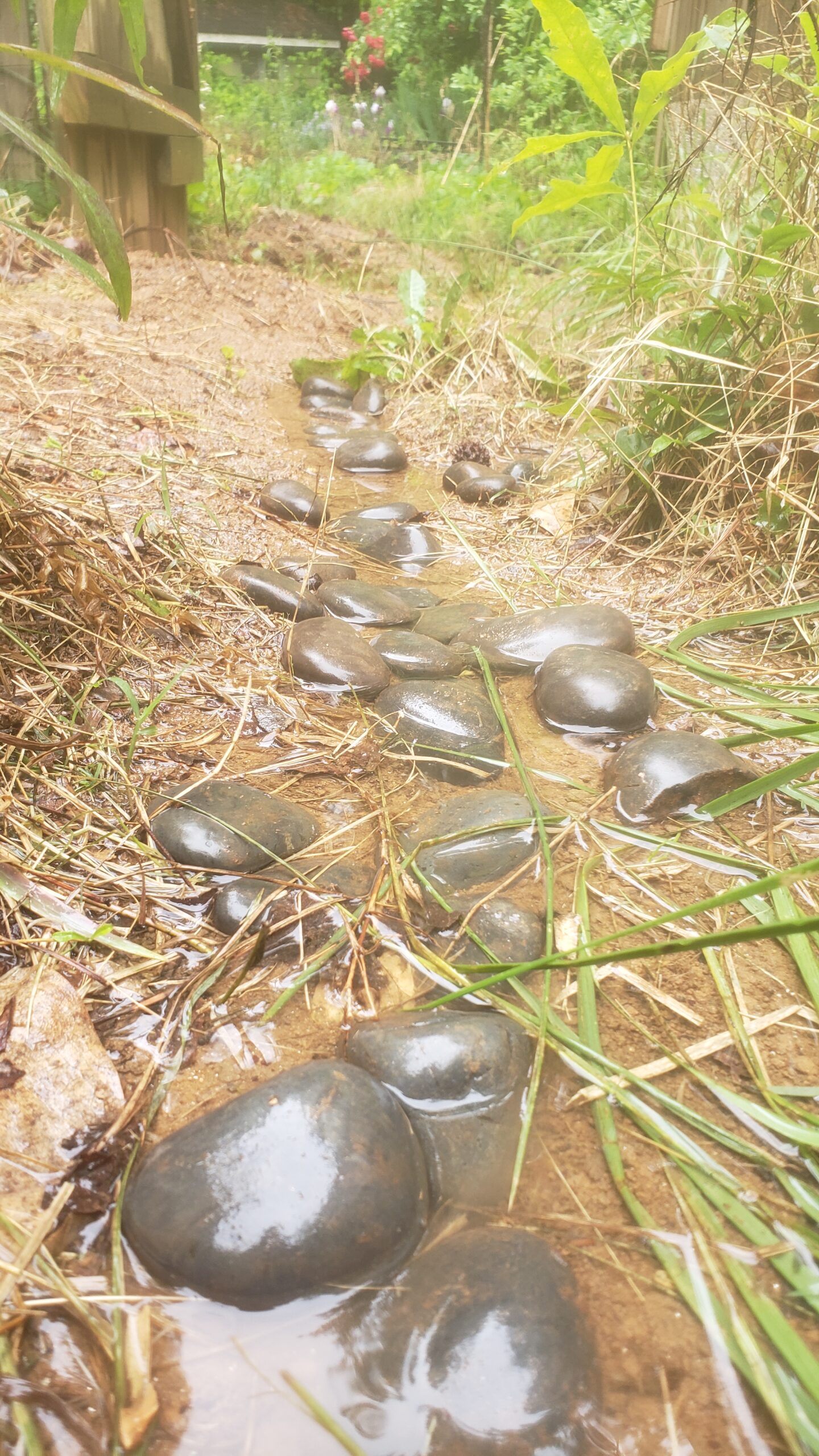
Bioswales & Dry Creeks: These systems are engineered to intercept high-velocity runoff from suburban surfaces, slowing the water down to prevent topsoil erosion and force infiltration into the parched root zones.
Micro-Climate Preservation: By maintaining a diverse canopy—including our native Red Mulberry and Green Ash saplings—we are fighting to keep soil temperatures down and prevent the “baking” effect of the summer sun.
Water Sovereignty as Recovery: After the chemical misapplication event of 2024, our soil was vulnerable. We are now using these hydrological interventions to ensure that the bioremediation work of the last 24 months isn’t lost to this current climate disaster.
The Reality of the S6160 Crisis
Even with these systems in place, the lack of consistent ground-water recharge is a primary concern for our 2026-2027 production cycle. We are working closely with the NRCS and FSA to ensure our infrastructure can withstand these shifting climate patterns.
Suburban Stormwater Management: Research on how bioswales function as filtration and infiltration units is available through the EPA’s Green Infrastructure documentation.