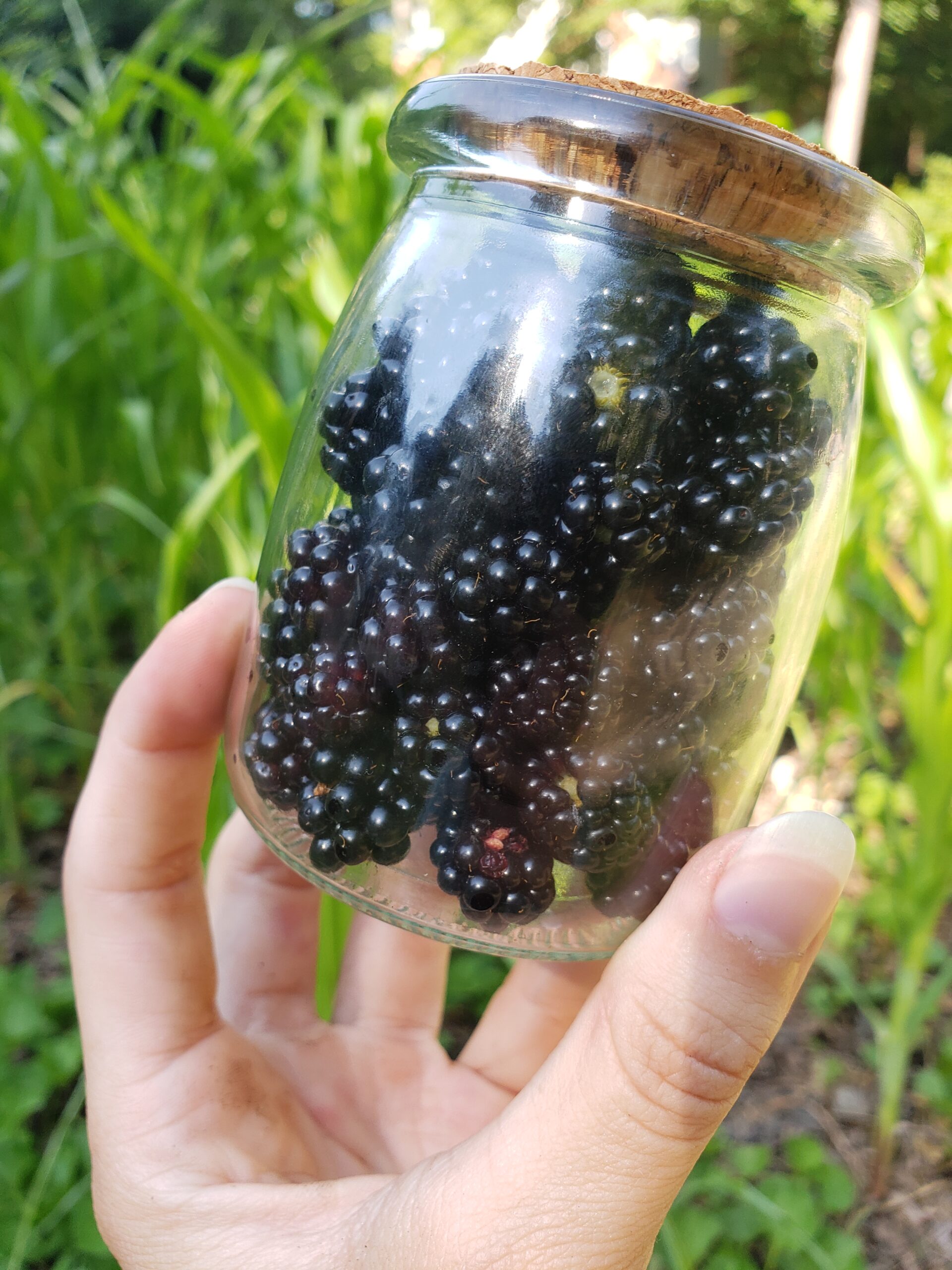
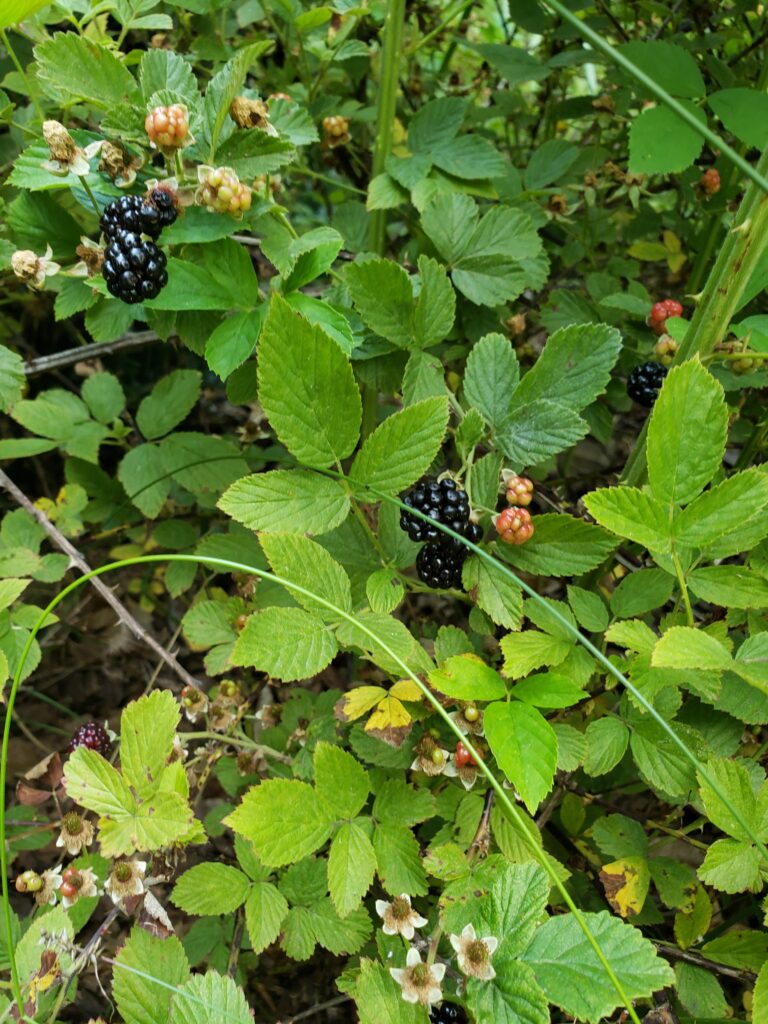
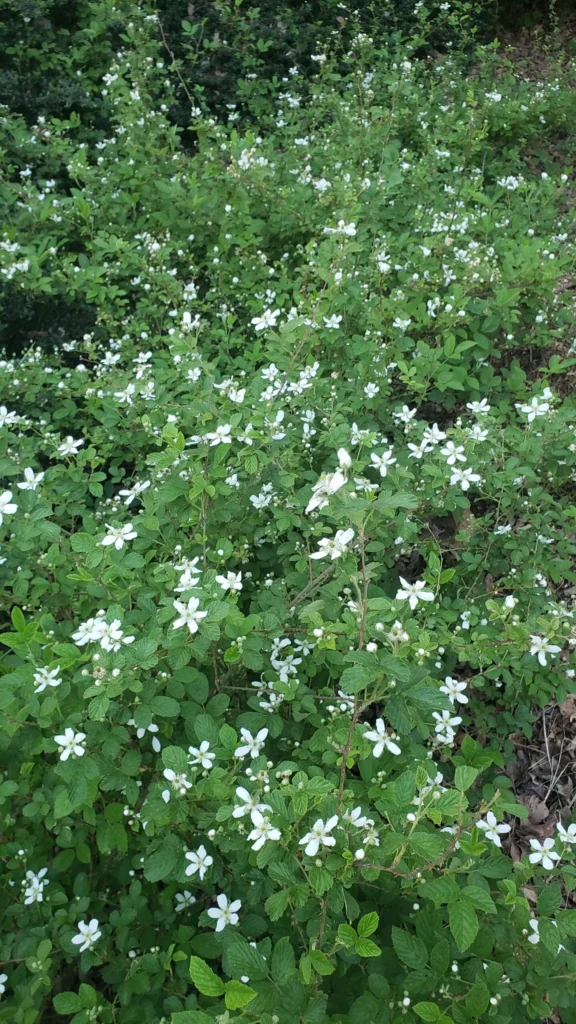
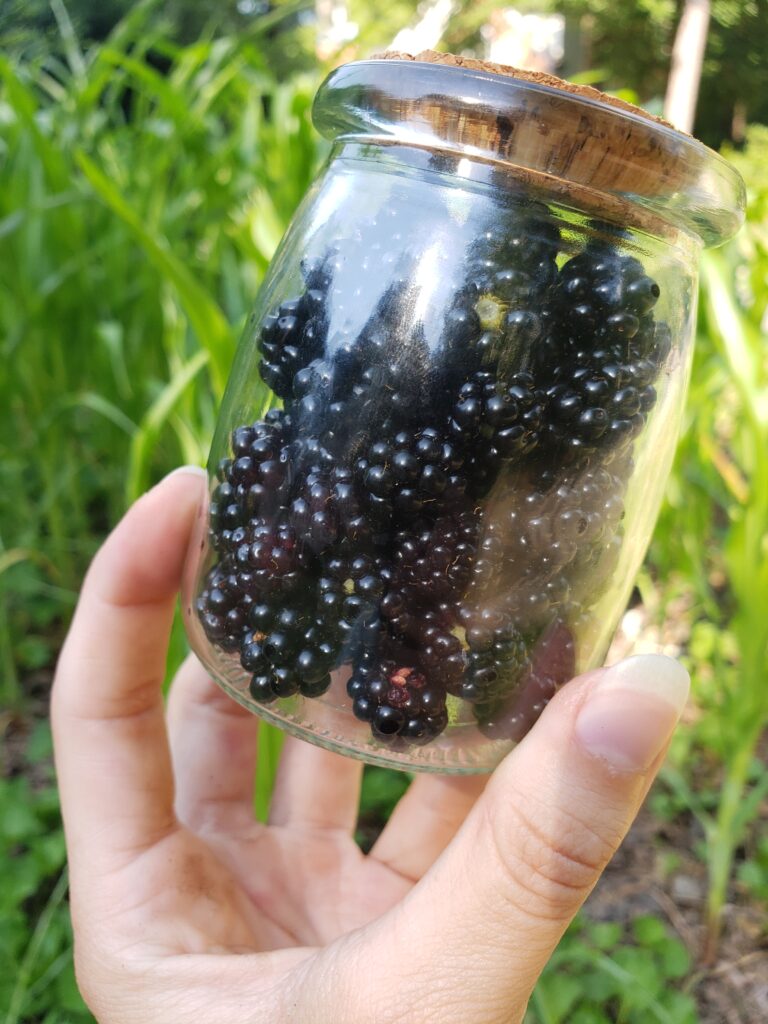
Blackberries are a delightful addition to any garden, especially in Georgia’s Zone 8a, where they thrive exceptionally well. These vigorous brambles are known for their beautiful flowers and bountiful harvests of delicious berries. In this post, we’ll explore the essentials of growing blackberries in Georgia, including planting, care, and the benefits of using mulch to retain moisture. We’ll also share some beautiful pictures of our blackberry bramble in full bloom and laden with berries.
Planting Blackberries
Choosing the Right Variety: Select a variety of blackberries that is well-suited to Georgia’s climate. Some popular varieties include ‘Navaho,’ ‘Apache,’ and ‘Arapaho,’ which are known for their excellent fruit quality and disease resistance.
Planting Location: Blackberries prefer full sun and well-drained soil. Choose a location that receives at least six hours of sunlight per day and has good air circulation to reduce the risk of disease.
Soil Preparation: Blackberries thrive in slightly acidic soil with a pH between 5.5 and 6.5. Amend the soil with organic matter, such as compost or aged manure, to improve fertility and drainage.
Planting Technique: Space blackberry plants about 3-4 feet apart in rows that are 8-10 feet apart. Dig a hole deep enough to accommodate the root system, place the plant, and cover the roots with soil. Water thoroughly after planting.
Caring for Blackberries
Watering: Blackberries require consistent moisture, especially during fruiting. Water the plants regularly, ensuring the soil remains moist but not waterlogged.
Mulching: Apply a thick layer of mulch around the base of the plants to retain moisture, suppress weeds, and regulate soil temperature. Organic mulches like straw, wood chips, or pine needles work well.
Fertilizing: Feed blackberry plants with a balanced fertilizer in early spring as new growth begins. Follow the recommended application rates on the fertilizer package.
Pruning: Prune blackberries annually to maintain plant health and productivity. Remove dead or diseased canes and thin out overcrowded areas to improve air circulation.
Using Mulch to Retain Moisture
Mulching is a crucial practice for growing blackberries successfully, particularly in Georgia’s warm climate. Here are some benefits of using mulch:
Moisture Retention: Mulch helps to retain soil moisture by reducing evaporation, ensuring the blackberry plants receive consistent hydration.
Weed Suppression: A thick layer of mulch suppresses weed growth, reducing competition for nutrients and water.
Temperature Regulation: Mulch acts as an insulating layer, keeping the soil cooler in summer and warmer in winter.
Soil Improvement: As organic mulch decomposes, it adds valuable organic matter to the soil, improving soil structure and fertility.
Pest and Disease Management
Pests: Common pests that may affect blackberries include aphids, spider mites, and Japanese beetles. Monitor your plants regularly and attract beneficial insects to help with pests.
Diseases: Blackberries can be susceptible to fungal diseases like anthracnose and powdery mildew. Ensure good air circulation and avoid overhead watering to manage these issues.
Harvesting Blackberries
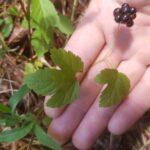
Ripeness: Blackberries are ready to harvest when they are fully black, plump, and easily detach from the plant. Avoid picking berries that are red or not fully ripe, as they will be tart and lack sweetness.
Harvesting Technique: Gently twist or pull the ripe berries from the cane. Handle them with care to avoid bruising, as blackberries are delicate and perishable.
Storing Berries: Store harvested blackberries in the refrigerator and use them within a few days for the best flavor and quality. Blackberries can also be frozen for later use.
Conclusion
Growing blackberries in Georgia’s Zone 8a is a rewarding experience that yields a bountiful harvest of delicious berries. By following the proper planting and care techniques, and utilizing mulch to retain moisture, you can enjoy healthy and productive blackberry plants year after year. With their beautiful flowers and abundant fruit, blackberries are a valuable addition to any garden.