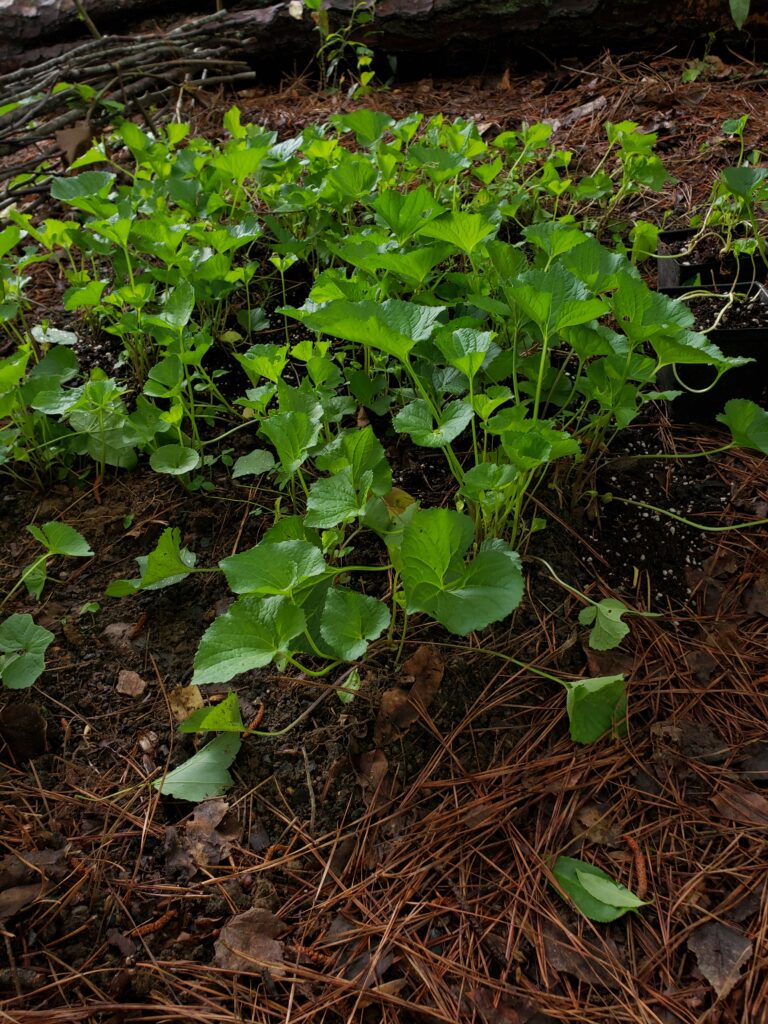
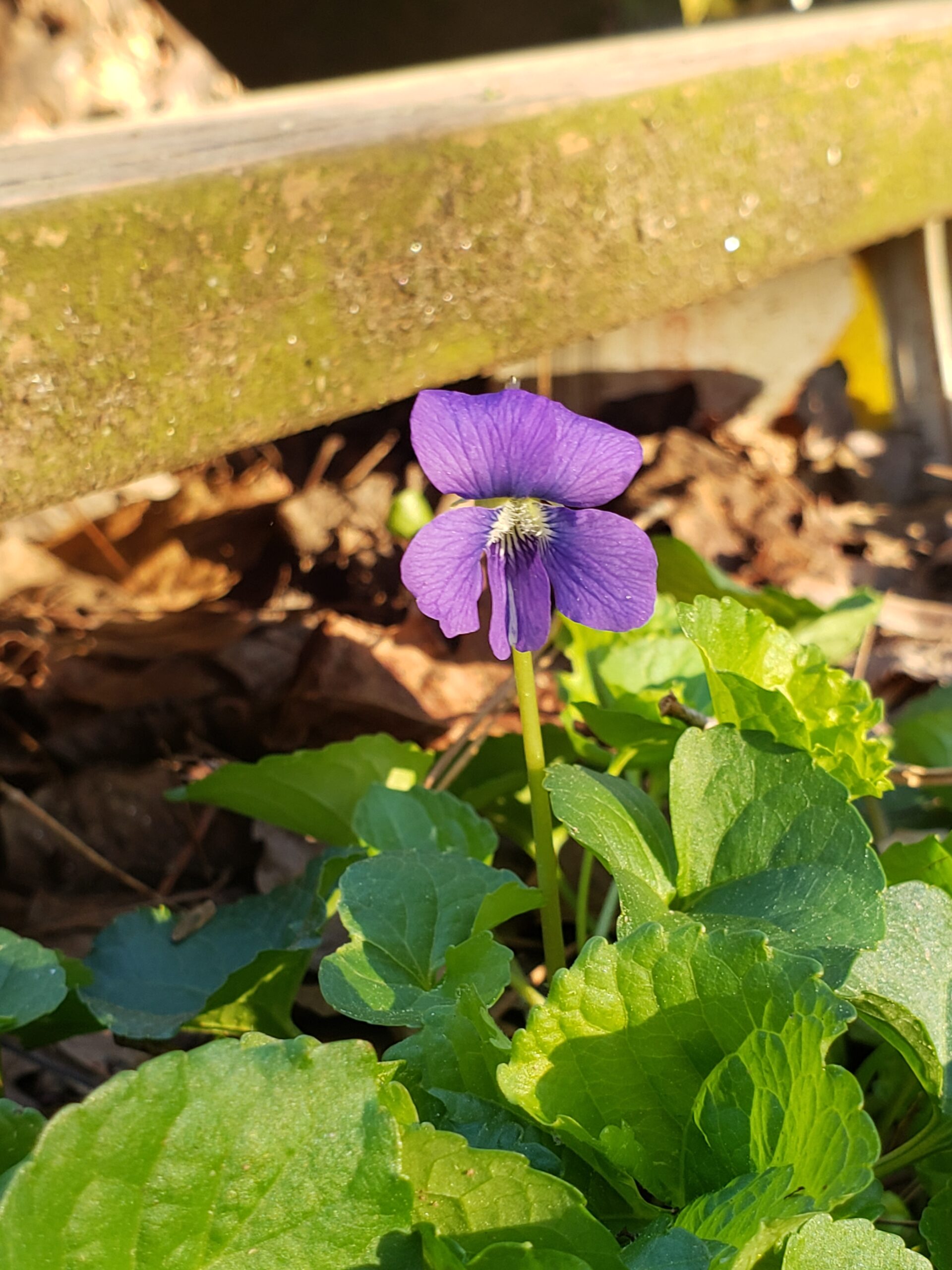
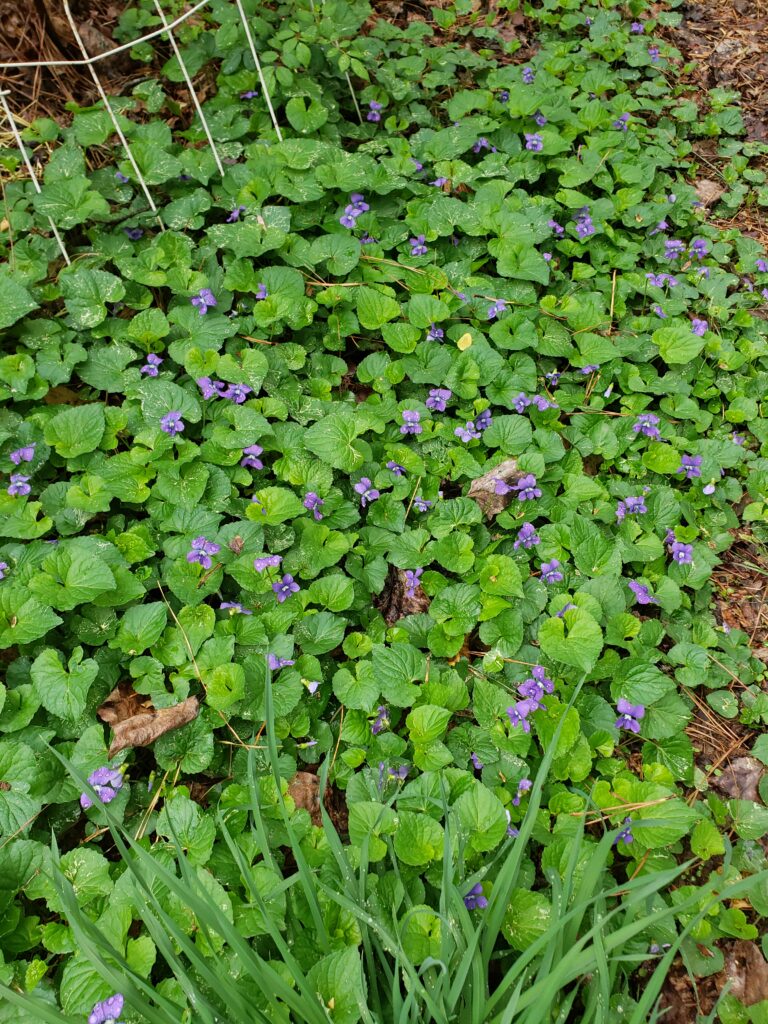
Have you noticed some heart-shaped leaves popping up around your lawn? Or perhaps a soft flush of purple under your shrubs? If you are lucky, it’s the common Blue Violet and violets are nature’s way of sending you a little love.
Some flowers can be toxic, so always exercise utmost care in identifying a plant species before eating. Many scanning apps are inaccurate so verify in other methods to ensure accuracy and safety!
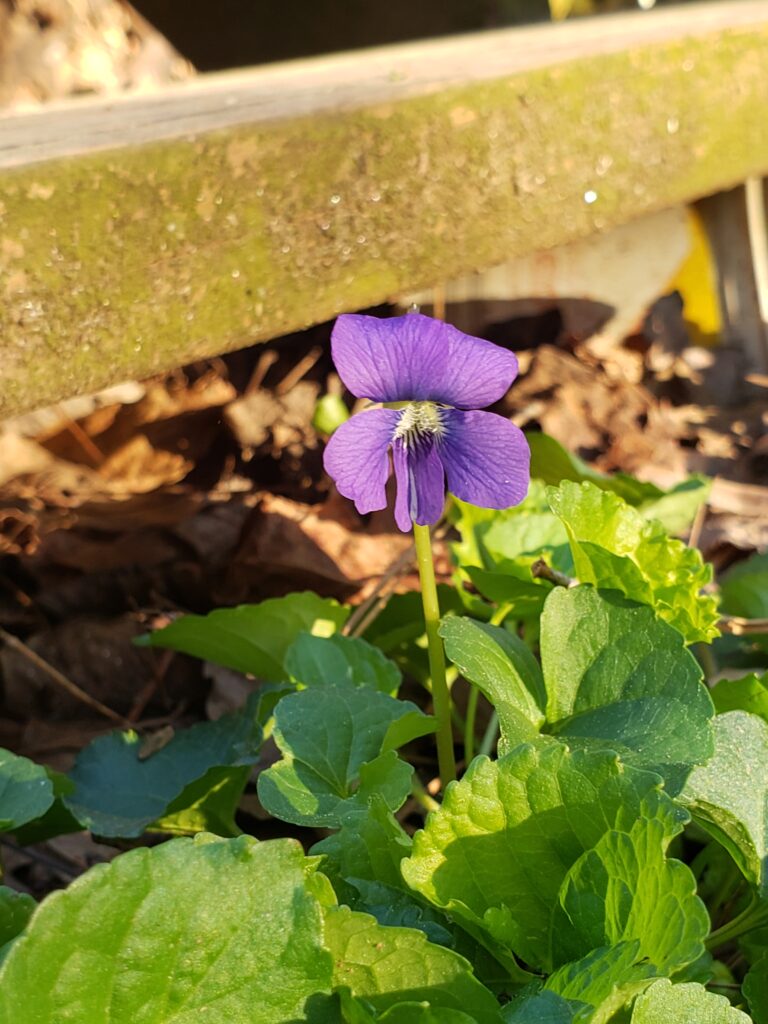
Violets (Violaceae) can come in many colors but the purple and variety is what grows at Good Chicken Gardens. They are known as the Common Blue Violet and have the characteristic heart-shaped blooms and blue flowers. There are potential look-alikes in some locations but the distinctive blue flower makes it easy to identify this patch.
How do I grow my own violets?
It’s very easy to grow the common blue violet in most areas of the United States because they love to grow here.
These resilient plants can adapt to either containers or being planted directly in the ground. They like moist soil and partial sun but can truly make a life for themselves almost anywhere.
They can reproduce by seed or via their root system! Since blooms are required for seed, bear in mind that harvesting all the blooms will likely create a surge in growth from the roots.